The Movie Night Myth: Everyone Wants to Pick
Movie night film choice gets easier when a group shares its viewing mood first, then picks a film that suits the evening rather than pleasing everyone.
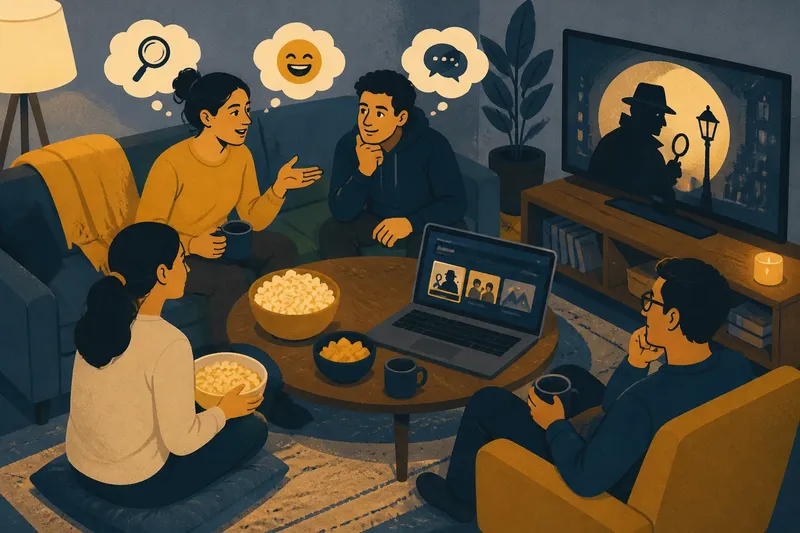
Movie night film choice is often blamed for a group’s stalled evening, but the real snag can be that people want different kinds of nights. One person may want a tense mystery, another an easy laugh, and someone else may simply want a film they can follow while chatting. Treating those moods as useful information changes the decision.
Imagine that Nisha invites three friends over after a tiring week. They spend several minutes scrolling through a streaming service, reject one suggestion after another, and begin to suspect nobody can agree. Instead of asking each guest to name a title, Nisha asks what sort of attention they have left for a film.
The Stalled Selection
At first, the group treats picking as a contest between titles. One friend suggests a long science-fiction epic, another nominates a broad comedy, and Nisha points to a crime thriller. Each choice sounds like a bid for the whole room’s approval, so turning one down feels personal.
That dynamic makes the catalogue seem like the problem. Yet a longer list would only offer more titles to disagree about. The friends have not established whether they want suspense, comfort, spectacle, or something that can sit lightly in the background.
Nisha pauses the scrolling and asks a more useful question: “Do you want to concentrate, laugh, or just have something on while we catch up?” This is not a vote on whose taste wins. It gives the group a shared starting point without requiring anyone to pretend to want the same film for the same reason.
Different Viewing Moods
The answers reveal distinct expectations. One guest wants a plot that rewards attention; another wants a warm comedy; the third is happy with animation, provided it is not emotionally heavy. Nisha admits she would rather avoid anything bleak after a demanding day.
Those preferences are not a neat genre list. A comedy can ask for close attention, and an animated film can be emotionally intense. The useful distinction is how the group hopes to spend the evening: following every turn, sharing a laugh, enjoying a vivid setting, or keeping conversation easy.
They also notice that mood can change the meaning of a familiar title. A subtle drama might be a welcome choice for a group ready to discuss it, but feel like homework when everyone is tired. A light adventure may be more appealing not because it is objectively better, but because it suits the energy in the room.
A Smaller Search
With the mood in view, Nisha opens the streaming service’s saved list rather than browsing its full catalogue. The friends look for films that could accommodate more than one preference: a lively mystery with comic touches, for instance, or an adventure with a clear story and no punishing tone.
They check descriptions and trailers, but keep those tools in proportion. A trailer can signal pace, humour, or visual style; it cannot settle whether the whole group will enjoy the film. The friends use it to rule out obvious mismatches, not to demand certainty before pressing play.
Nisha’s invented evening takes shape when the group settles on a light mystery one guest had saved. It offers the attentive viewer clues to follow, the comedy-seeker moments of humour, and the tired guests a story that does not require them to track a dense fictional world. They expect a film that gives everyone something to enjoy, even if it is nobody’s first-choice genre.
When Should a Group Choose?
Should everyone nominate a film?
Only if the group enjoys comparing titles. If nominations turn into competing pitches, ask about mood first and use titles later as candidates rather than claims on the evening.
What if someone has no preference?
“Anything is fine” may mean genuine flexibility or low energy. Offer a small set of distinct options, such as a gentle comedy or an absorbing mystery, and let that person respond to the contrast.
Does the film need to suit everyone equally?
No. A shared choice can give different viewers different pleasures without being a perfect match for every taste. Agreeing on the kind of evening matters more than finding a film with universal appeal.
What if the group still cannot agree?
Set a simple boundary, such as choosing from the titles already saved or letting one person pick this time. The aim is to end the search kindly, not to turn a relaxed evening into a test of consensus.
What the Evening Shows
In Nisha’s invented situation, the result is observable without making the choice sound like a cure-all: the group stops scrolling, starts a film, and settles into the room. One friend follows the clues, another laughs at the lighter moments, and the conversation eases as the story gets under way.
The useful lesson is not that a mixed-genre film always solves group disagreement. It is that the first question can be about the audience rather than the catalogue. Once people describe their mood and desired level of attention, they can look for overlap without disguising their individual tastes.
For another movie night, try asking each person for one thing they want from the evening and one thing they would rather avoid. Keep those answers brief, then choose from a short list that fits the group’s shared mood. Movie night film choice becomes less of a demand to crown one person’s taste and more of a small act of hospitality: making space for several ways to enjoy the same screen.